
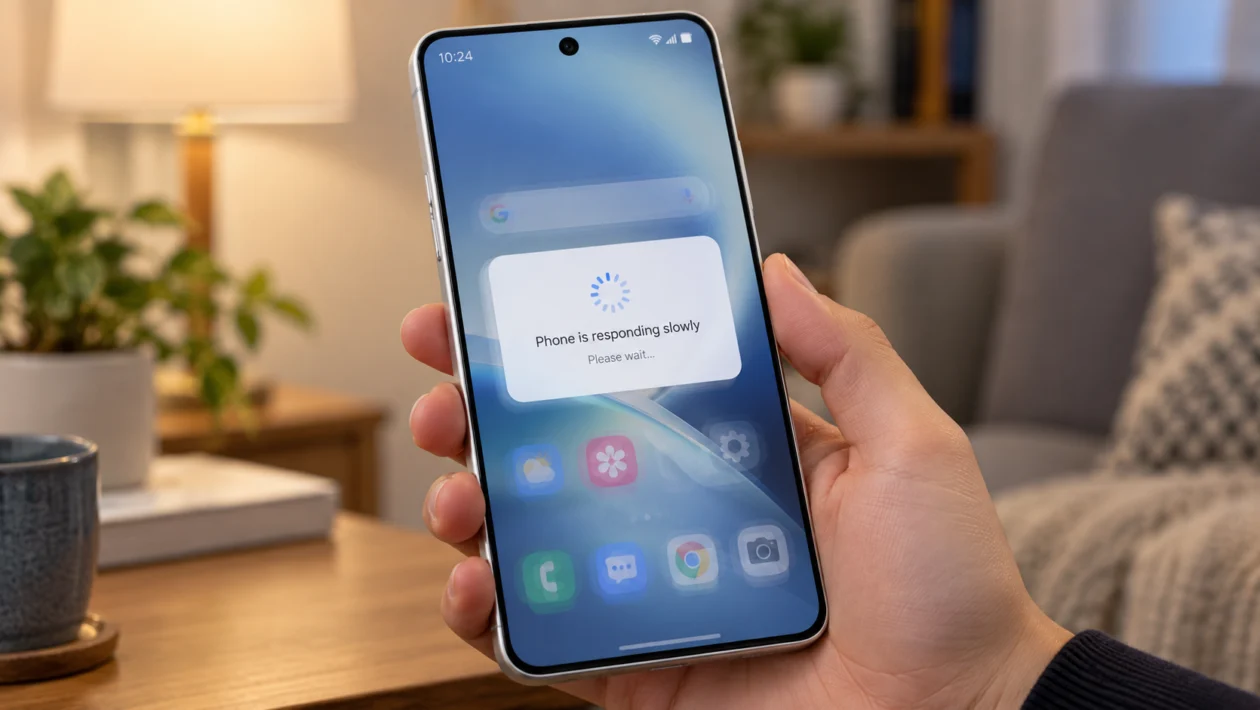
If your vivo X500 Pro feels slow, laggy, or delayed when switching apps, opening settings, scrolling, or going back to the home screen, the problem is usually caused by background apps, low storage, heavy animations, outdated software, overheating, or an app that is using too many resources.
Start with the simple fixes first. Restart the phone, check storage, update your apps, and look at battery or performance settings before trying bigger steps.
Quick answer
To fix a slow vivo X500 Pro UI, restart the phone, update the system software, update your apps, clear app cache, free up storage, close background apps, reduce animations, and check whether the phone is overheating.
If the slowdown started after an update, give the phone a little time to re-optimize, then update apps and restart it again. If the UI still feels slow after trying all fixes, reset system settings or contact vivo support.
vivo X500 Pro slow UI diagnostic table
| Symptom | Likely cause | Check first |
|---|---|---|
| UI lags when switching apps | Too many background apps | Recent apps and RAM usage |
| Scrolling feels choppy | Refresh rate, animations, heavy app | Display and animation settings |
| Phone is slow after update | System re-optimizing or app conflict | Software update and app updates |
| Home screen is laggy | Too many widgets or live wallpaper | Home screen setup |
| Apps open slowly | Low storage or app cache | Storage and cache |
| Phone gets warm and slows down | Thermal throttling | Heat, charging, gaming, camera use |
| Keyboard or gestures lag | Background processes | Restart and app usage |
| Phone freezes randomly | Buggy app or system issue | Safe Mode or uninstall recent apps |
| Slow only in one app | App-specific bug | Update, clear cache, reinstall app |
| Slow even after fixes | Deeper software or hardware issue | Reset settings or vivo support |
Why is my vivo X500 Pro UI slow?
Your vivo X500 Pro may feel slow because the system is under load. This can happen when too many apps are running, internal storage is nearly full, the phone is hot, animations are heavy, or an app is misbehaving in the background.
Common causes include:
Too many apps open in the background
Low internal storage
Outdated apps
Recent software update
Heavy widgets or live wallpaper
High refresh rate or visual effects
Overheating
Battery saver or performance limits
Buggy third-party app
System settings conflict
The good news is that most UI lag can be fixed without deleting your personal files.
1. Restart your vivo X500 Pro
Start here. A restart clears temporary system glitches and closes background processes that may be making the UI feel slow.
- Press and hold the Power button.
- Tap Restart.
- Wait for the phone to turn back on.
- Use the phone normally for a few minutes.
- Check whether scrolling, gestures, and app switching feel smoother.
This is the easiest fix if the slowdown appeared suddenly.
2. Update your phone software
A software bug can make the UI feel slow, especially after a major update or security patch. Updating your vivo X500 Pro can fix performance issues, app compatibility problems, and system lag.
- Open Settings.
- Tap System update.
- Check for available updates.
- Download and install the update if one is available.
- Restart the phone after updating.
Keep the battery above 50% before updating, or plug the phone into a charger.
If your vivo X500 Pro became slow right after an update, restart it first, update your apps, then monitor it for a day. Phones can feel slower for a short time while the system finishes background optimization.
3. Update your apps from the Play Store or vivo App Store
One bad app can slow down the whole phone. Apps that are not updated may use too much memory, crash in the background, or conflict with the latest system version.
To update apps from Google Play:
- Open the Google Play Store.
- Tap your profile icon.
- Tap Manage apps and device.
- Tap Update all.
Also check the vivo App Store if your phone uses it for system apps or regional app updates.
Pay close attention to apps you use often, such as social media apps, browsers, shopping apps, games, camera tools, VPNs, launchers, and keyboard apps.
4. Close background apps you are not using
If too many apps stay active in the background, the phone may feel slower when switching screens or opening new apps.
- Swipe up from the bottom and hold to open Recent apps.
- Close apps you are not using.
- Keep only important apps open.
- Avoid reopening several heavy apps at the same time.
This helps most when the UI slows down after gaming, recording video, editing photos, browsing with many tabs, or using navigation apps.
Do not constantly clear all apps every few minutes. Just close the heavy ones when the phone starts feeling slow.
5. Clear cache for apps that feel slow
App cache can build up over time. A large or corrupted cache may cause lag, freezing, delayed loading, or slow scrolling inside certain apps.
- Open Settings.
- Tap Apps.
- Choose the app that feels slow.
- Tap Storage.
- Tap Clear cache.
Start with apps that use a lot of storage, such as browsers, TikTok, Facebook, Instagram, YouTube, shopping apps, maps, and games.
Do not tap Clear storage unless you are ready to reset that app. Clearing storage can remove app data, saved settings, downloads, or login sessions.
6. Free up internal storage
A phone can become slow when storage is almost full. The system needs free space for temporary files, app updates, downloads, camera processing, and background tasks.
- Open Settings.
- Tap Storage.
- Check how much space is available.
- Delete large videos, duplicate photos, unused apps, and old downloads.
- Move important files to cloud storage, a computer, or an external drive if needed.
Try to keep at least 10% to 15% of your storage free. If your vivo X500 Pro is almost full, freeing storage can make the UI feel smoother quickly.
Start with videos first. They usually take more space than apps or documents.
7. Reduce home screen widgets, live wallpaper, and visual effects
The home screen can feel slow if it has too many widgets, animated wallpapers, third-party launchers, or heavy visual effects.
Try this:
- Remove widgets you do not need.
- Switch from live wallpaper to a normal wallpaper.
- Remove unnecessary home screen pages.
- Disable heavy third-party launchers if you use one.
- Restart the phone.
This can help if the lag happens mostly when unlocking the phone, swiping between home screens, opening the app drawer, or returning to the home screen.
A clean home screen is usually faster than one filled with widgets, animations, and constantly updating panels.
8. Adjust refresh rate, animations, and display settings
A high refresh rate makes the screen feel smoother, but some apps may still stutter if the system is under load. Animations can also make the phone feel slower even when performance is normal.
Check display settings first:
- Open Settings.
- Tap Display and brightness.
- Look for Screen refresh rate.
- Choose a balanced or standard option if battery or heat is a problem.
- Test the phone again.
You can also reduce animations through developer options, but only do this if you are comfortable changing advanced settings.
To reduce animations:
- Open Settings.
- Tap About phone.
- Tap Build number several times until Developer options are enabled.
- Go back to Settings.
- Open Developer options.
- Find Window animation scale, Transition animation scale, and Animator duration scale.
- Set them to 0.5x.
Do not change other developer settings unless you know what they do.
9. Check overheating and battery performance settings
Your vivo X500 Pro may slow down when it gets hot. This is normal behavior because the phone protects itself by reducing performance.
The phone may heat up when you are:
Gaming
Recording long videos
Using the camera outdoors
Charging while using the phone
Using mobile data in weak signal areas
Running hotspot
Using GPS navigation
Downloading large files
If the phone feels warm and the UI becomes slow:
- Stop heavy apps for a few minutes.
- Remove the phone case while it cools.
- Avoid gaming while charging.
- Turn off hotspot if you are not using it.
- Move away from direct sunlight.
- Restart the phone once it cools down.
Also check battery modes:
- Open Settings.
- Tap Battery.
- Turn off extreme power saving or ultra power saving if enabled.
- Use balanced mode for normal use.
Power saving can help battery life, but it may reduce background activity, refresh rate, sync, or performance.
10. Reset settings if the UI is still slow
If the UI is still slow after trying the earlier fixes, reset system settings before doing a full factory reset.
A settings reset can fix system conflicts without removing your photos, videos, or personal files. The exact wording may vary depending on your software version.
- Open Settings.
- Tap System.
- Tap Reset options.
- Choose Reset all settings if available.
- Confirm the reset.
- Restart the phone.
If the vivo X500 Pro is still slow after that, back up your files and consider a factory reset.
Before a factory reset:
Back up photos and videos
Back up contacts
Save important app data
Check WhatsApp or messaging backups
Remember your Google account and vivo account login details
A factory reset should be your last software fix. If the phone remains slow even after a clean reset, contact vivo support or visit a service center.
When should you contact vivo support?
Contact vivo support if your vivo X500 Pro:
Freezes even after restarting
Lags badly after a factory reset
Gets hot during light use
Shuts down by itself
Shows system errors often
Cannot install updates
Feels slow even with plenty of free storage
Started lagging after a drop, liquid exposure, or repair
If the issue is hardware-related, software fixes may not solve it.
FAQs
Why is my vivo X500 Pro slow after an update?
Your vivo X500 Pro may feel slow after an update because the system is still optimizing apps, refreshing background services, and rebuilding temporary files. Restart the phone, update your apps, and use it normally for a day before judging performance.
Will clearing cache delete my files?
Clearing app cache usually does not delete your personal files. It removes temporary app data. Do not choose Clear storage unless you want to reset the app.
Does low storage make vivo X500 Pro slow?
Yes. Low storage can make the UI feel slower because the phone has less room for temporary files, app updates, and background tasks. Freeing up space can improve performance.
